

The 5 criteria
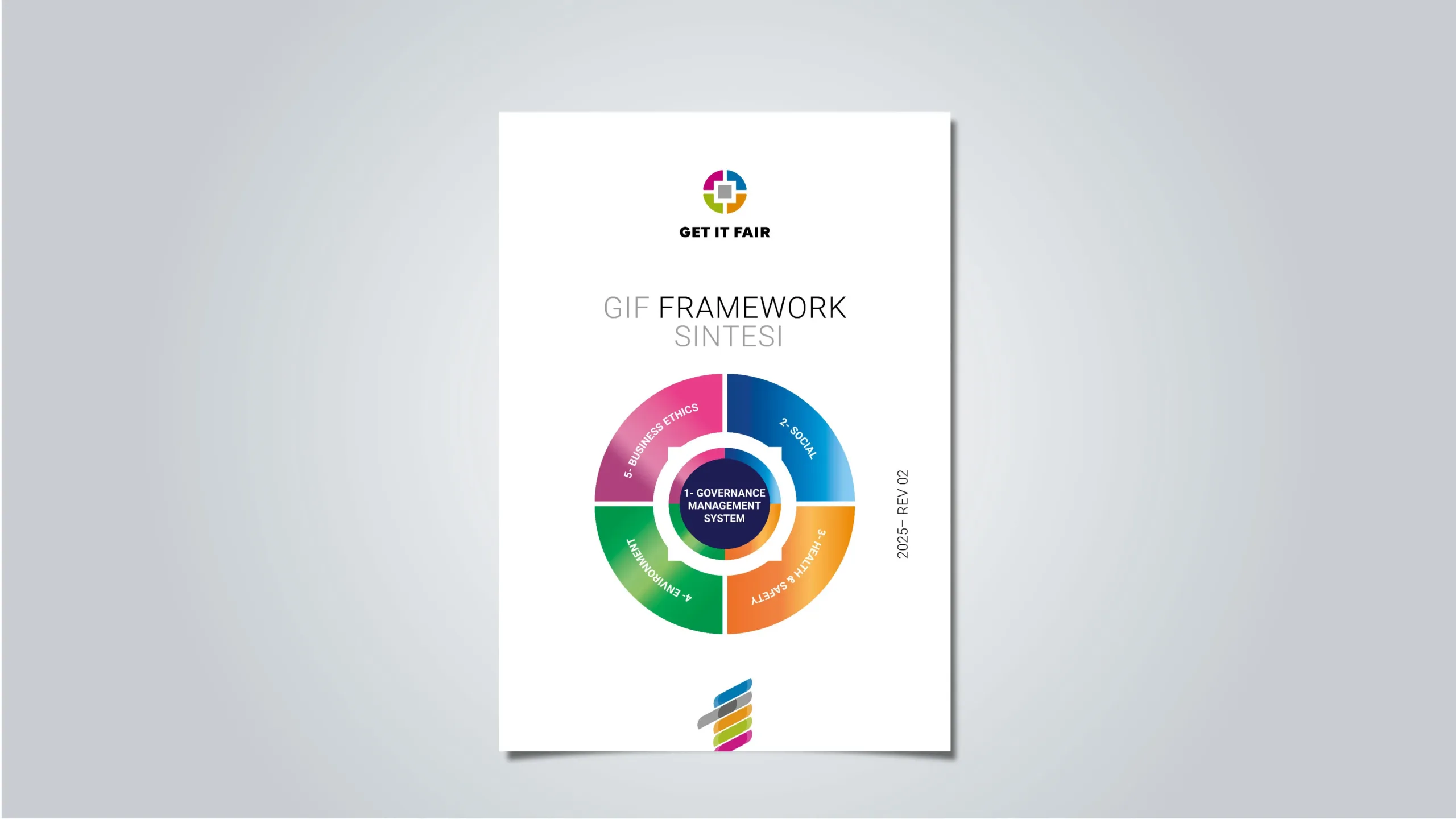
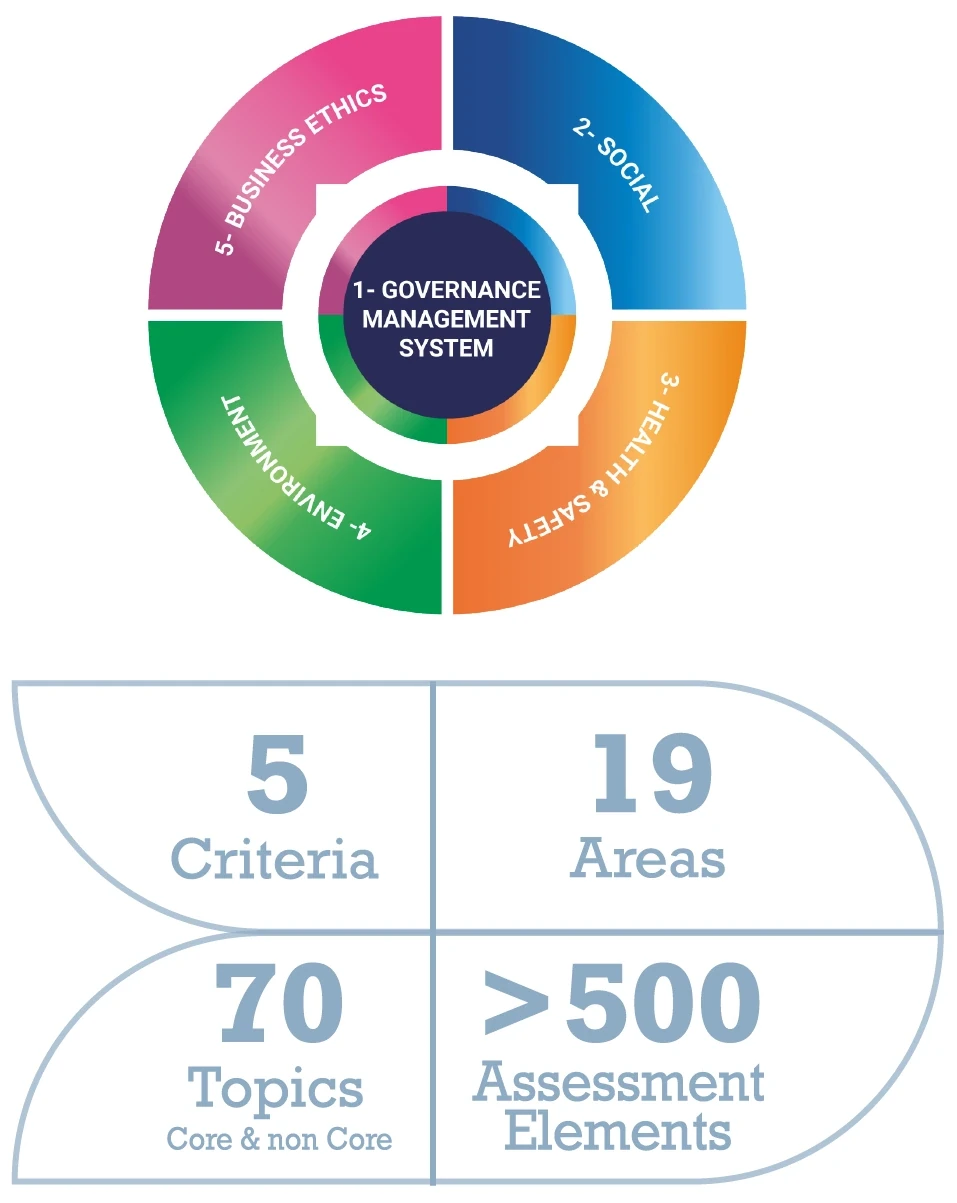
The structure of the GIF Framework is deliberately simple: it is based on five sustainability-focused criteria.
Overall, the five criteria are articulated into 70 topics, classified as core and non-core, and grouped into 19 coherent areas:

Governance

Social

Health and Safety

Environment

Business Ethics

Governance and Management System
This criterion focuses on how organisations define, implement, monitor and continuously improve an integrated governance and management system that embeds ESG considerations across all processes.
Its purpose is to assess how effectively the organisation manages its processes by balancing economic performance with the fulfilment of stakeholder expectations over the short, medium and long term.

Social
This criterion focuses on human rights, working conditions and local communities, taking into account the relevance of social issues within both the internal and external context of the organisation.
Its purpose is to assess exposure to current and potential social risks arising from the organisation's activities and across its value chain. Such risks may have adverse impacts on people and result in financial and non-financial losses for both the organisation and its stakeholders.

Health and Safety
This criterion focuses on the health and safety of workers, taking into account the materiality of occupational health and safety issues within the organisation's specific context.
Its purpose is to assess how the organisation identifies, assesses and defines mitigation and remediation plans for events that may occur in its activities and across its value chain, potentially affecting people's health, in particular that of workers.

Environment
This criterion is structured around four areas—pollution, circular economy, climate change and the natural environment—taking into account their relevance to the organisation.
Its purpose is to assess the extent to which environmental events arising from the organisation's activities and across its value chain are identified and assessed, and for which mitigation and remediation plans are defined. Such events may result in environmental impacts and lead to financial and non-financial losses for the organisation and its stakeholders.

Business Ethics
This criterion focuses on fair operating practices (such as anti-corruption and respect for property rights) and on customer-related issues (including fair commercial practices and data protection), taking into account their relevance for the organisation and its stakeholders.
Its purpose is to assess the extent to which ethical risks arising from the organisation's activities and across its value chain are identified, assessed and mitigated, as such risks may result in financial and reputational losses for the organisation and its stakeholders.
CORE topics and NON-CORE topics
It is a fundamental distinction because in order to obtain the 'GIF RESPONSIBLE ORGANIZATION' label it is necessary to achieve a minimum score on all the «core» topics.
Core
Topics set out in the "OECD for responsible business conduct" guidelines and in the ISO 26000 standard for which it is mandatory to reach a minimum score threshold [40 points]
Non-Core
Topics defined in the ISO 26000 standard "Guidance on social responsibility".
For these topics, achieving a minimum score threshold is not required.